
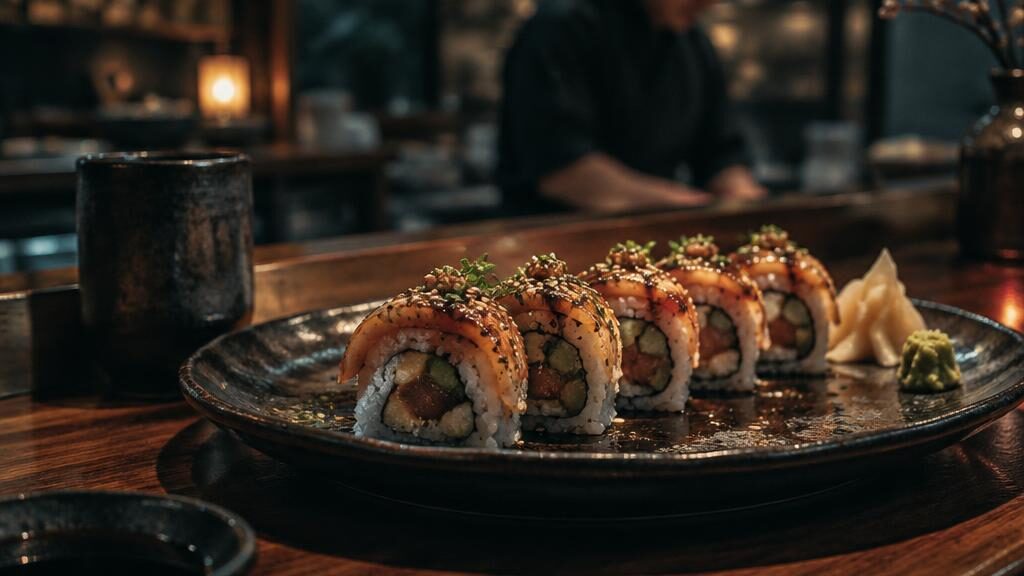
Sushi’s journey across borders transformed a Japanese culinary tradition into something increasingly global. Along the way, immigrant chefs, Norwegian salmon exporters and new generations of Asian Americans changed what sushi could be.
THE PROBLEM WITH SEAWEED
When Japanese chefs began serving sushi in North American cities such as Los Angeles and Vancouver, many customers found it intimidating. Raw fish was unfamiliar, and even nori—the dark sheet of seaweed wrapped around sushi rice—could be a difficult sell.
So chefs adapted.
They turned rolls inside out, hiding the nori beneath white rice, and experimented with ingredients that felt more familiar. Avocado offered the rich, buttery texture associated with fatty tuna, while imitation crab was mild, inexpensive and approachable. Out of this experimentation came the "California Roll".
Exactly who invented it remains disputed, with claims connected to both Los Angeles and Vancouver. But its importance is clearer: the California Roll helped introduce sushi to Western diners by meeting them halfway.
THE FISH THAT JAPAN DID NOT WANT
Then came another unlikely transformation.
In the 1980s, Norway’s growing Atlantic salmon industry was searching for new markets. Japan seemed promising, but there was a problem: raw salmon was not traditionally a standard sushi ingredient there. Japanese consumers were familiar with local Pacific salmon, which carried parasite concerns and was generally cooked, grilled or salted.
Through an initiative known as "Project Japan", Norwegian exporters spent years promoting farmed Atlantic salmon as clean, consistent and suitable for eating raw. The campaign eventually helped change perceptions, and salmon became one of the most recognizable sushi toppings in Japan and around the world.
SUSHI KEPT MIGRATING
But sushi’s evolution did not stop there.
In 2008, Filipino-American entrepreneur Peter Yen helped launch "Sushirrito" in San Francisco, transforming the maki roll into a large, portable, burrito-like meal suited to busy city life. Then, during the 2020 pandemic, "Sushi Bake" surged across social media. Popular particularly within Filipino communities, it dismantled the roll entirely: sushi rice, seafood and creamy toppings were layered into a casserole-style dish, baked and shared.
To a sushi purist, these creations may seem far removed from traditional Japanese sushi. But they reveal something central to the Migration Meals story:
FOOD CHANGES WHEN PEOPLE MOVE
Sushi became global not simply because the world learned to eat Japanese food, but because chefs, businesses and communities adapted it to new ingredients, tastes and ways of life. And with every border it crossed, sushi became something new.