
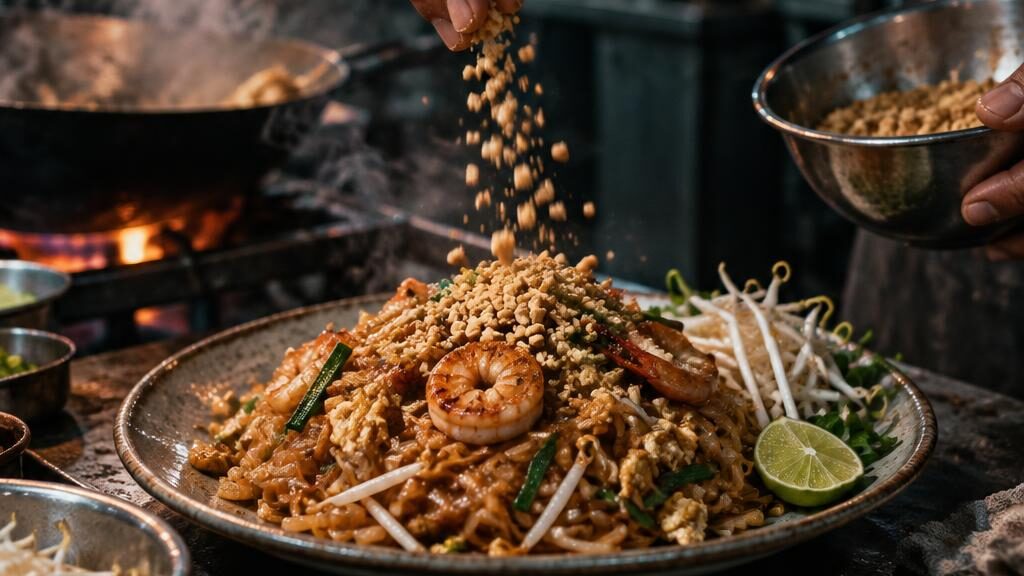
Pad Thai feels inseparable from Thai cuisine today. But its rise was tied to a remarkable period of nation-building, economic pressure and government promotion that helped turn a noodle dish with Chinese influences into a symbol of Thailand.
BUILDING A NATION THROUGH FOOD
In the late 1930s, Thailand was undergoing an ambitious cultural transformation.
Prime Minister Plaek Phibunsongkhram, commonly known as Phibun, wanted to create a stronger, more unified national identity. His government introduced cultural policies affecting everything from clothing and language to everyday behavior. Food became part of that project.
Pad Thai was particularly interesting because its foundations reflected considerable "Chinese culinary influence". Rice noodles and wok-based stir-frying techniques had strong connections to Chinese migration and food culture.
But ingredients such as tamarind and palm sugar helped transform those influences into something distinctly Thai.
NOODLES IN THE TIME OF SCARCITY
Politics was only part of the story.
During the early 1940s, World War II disrupted trade, while flooding damaged rice production around Bangkok. Thailand faced pressure on its food supply. Noodles offered a practical solution. Turning rice into rice flour and noodles could help stretch available rice supplies, while producing an inexpensive and filling meal suited to street vending.
Pad Thai therefore fitted several priorities at once: it was economical, accessible and could be promoted as part of a modern Thai identity. The government encouraged noodle consumption through recipes, public campaigns and support for street vendors. Gradually, a dish shaped by migration, necessity and politics became part of everyday life.
TAKING PAD THAI AROUND THE WORLD
Decades later, Thailand again recognized food’s ability to shape national identity—this time overseas.
In 2002, the Thai government launched the Global Thai program, supporting the expansion of Thai restaurants internationally and increasing the visibility of Thai cuisine. For countless diners abroad, Pad Thai became one of their first introductions to Thai food. Its journey complicates the idea of a “national dish.”
Chinese migration influenced the technique. Thai ingredients transformed the flavor. Food shortages made noodles practical. Nation-building helped popularize the dish. And decades later, Thailand helped carry its cuisine around the world.
Pad Thai did not become a national symbol because it remained unchanged for centuries. It became one because history kept changing it.